
We are all here to help you achieve a healthy and beautiful smile.
Now that your braces are in place, it is very important to maintain a good oral hygiene regimen throughout the length of your treatment. Braces, wires, bands and retainers can all trap food particles and make it difficult to brush or floss away plaque. Careful brushing and flossing, preferably after every meal and snack, is the best way to prevent plaque build-up, tooth decay and gum disease.
Brushing while Wearing Braces
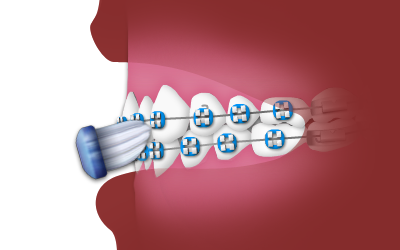 Especially during orthodontic treatment, brush your teeth four times daily to avoid the accumulation of food particles in your teeth and braces:
- In the morning after breakfast
- After lunch or right after school
- After dinner
- At bedtime
Flossing while Wearing Braces
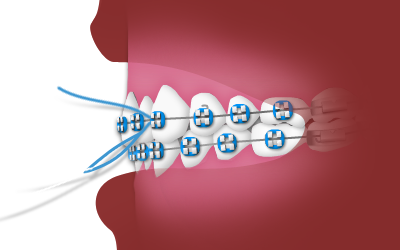 Flossing takes more time and patience when you are wearing braces, but it is important to floss your teeth every day. We recommend flossing at night to make sure your teeth are clean before you go to bed.
Use a reusable floss threader to floss under your archwire. Pull a small length of floss from the dispenser through the threader, and slide it up and down along the front of each tooth. Use care around your archwire, and do not floss too forcefully around it or put too much pressure on it.
Rinsing with an Antibacterial Mouthwash
 To reduce inflammation to your gums and cheeks, we suggest using a hydrogen peroxide antiseptic mouth rinse. This rinse will help prevent infection and decrease irritation that may develop from your braces. Rinse your mouth with two teaspoons of the hydrogen peroxide rinse for one minute, and then spit it out. You may use it up to four times daily following brushing. Just like using peroxide for a scrape on your skin, this hydrogen peroxide mouth rinse helps the inside of your mouth heal. It can be used for general irritation caused by your braces or for canker sores, cheek bites and other minor injuries to the gums.
Using an Interdental Toothbrush
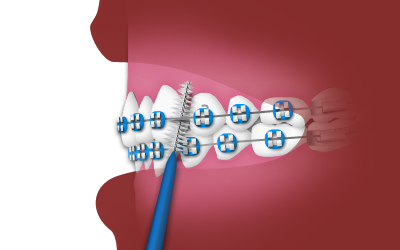 An interdental (between the teeth) toothbrush is used to clean underneath and around your archwires and braces. Please use the interdental toothbrush gently to avoid damaging your wires.
Topical Fluoride
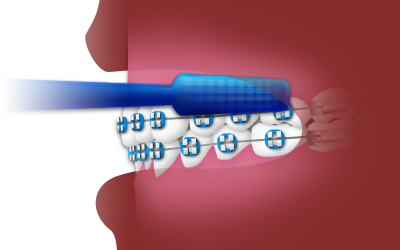 We recommend using a sodium fluoride gel to help prevent tooth decay while you are wearing braces. This gel kills bacteria and replaces minerals in the tooth enamel that have been removed by harmful acids. Using a fluoride gel does not replace daily brushing and flossing, but it should be applied following your daily schedule at bedtime. Place a small strip of the gel on a toothbrush, and apply it to your teeth for one minute. Then spit it out. Do not eat or drink for 30 minutes afterward. It is important for the active ingredient to stay on your teeth for 30 minutes, so do not wash it away by eating, drinking or rinsing.
Cleaning Your Removable Appliance
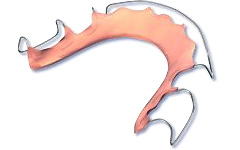 Brush your removable appliance every day as a part of your regular brushing and flossing schedule. Because food particles and plaque can accumulate on your appliance just as they do on your teeth, soak the appliance daily. Dissolve a denture-cleaning tablet in a glass of tap water at room temperature, and soak your appliance once a day.